The most common way to cool off in Haiti is with a large cool cup of Fresco. Fresco is very similar to a snow cone but its consistency is much softer.]]>
The most common way to cool off in Haiti is with a large cool cup of Fresco. Fresco is very similar to a snow cone but its consistency is much softer. Snow codes are usually made with crushed ice where as a Fresco is made with shaved ice. The most popular flavor you will find is cherry and it is typically topped off with roasted peanuts. Other flavors include pineapple, watermelon, lemon, and mango. Here is an easy version you can make at home.
Using a shave ice machine, shave 1 cup of ice packed tightly into a cup.
Pour the grenadine over the ice and mix.
Throw in some roasted nuts to get that perfect savory taste.
One of the many foods Haitians eat for breakfast is Labouyi Bannann (Plantain Porridge). If you have never had Labouyi for breakfast than you are missing out.]]>
One of the many foods Haitians eat for breakfast is Labouyi Bannann (Plantain Porridge). If you have never had Labouyi for breakfast than you are missing out. Porridges have long been an integral part of Caribbean cuisine. Porridge is meant to fortify and strengthen for long periods of time. Unlike typical porridges which use grains such as oats, wheat, and corn; Labouyi uses plantains. The porridge is sweet and creamy with the consistency of light grits. Labouyi can also be made with flour and cornmeal. Try starting the day off with it.
Peel the skin of the plantain and cut into small 4-8 small pieces. It is ok to leave some of the skin for extra nutrients.
In a blender, puree the plantain and 2 cups of water.
In a 1 quart saucepan, add 1 cup of water, evaporated milk, coconut milk, cinnamon, star anise and bring to boil.
Once the pot is boiling, add the plantain puree to the pot and bring to a boil while stirring continuously for 5 min. The porridge will thicken slightly.
Add the salt, sugar, vanilla and keep stirring for 10 min.
Reduce the heat to medium and keep stirring for another 10 min while tasting porridge to ensure the plantain is thoroughly cooked. The porridge is ready when the texture is creamy.
Serve warm with some Haitian Bread.
Traditional Haitian Bread is the most common bread you will find through out Haiti. The bread comes in many shapes and sizes and is often served with delicious Haitian coffee. ]]>
Traditional Haitian Bread is the most common bread you will find through out Haiti. The bread comes in many shapes and sizes and is often served with delicious Haitian coffee. Each baker has their own twist on the ingredients so here is a simplified version with the most common ingredients. Once you try it once you will never buy bread again.
In a large mixing bowl, add the flour, yeast, sugar and butter.
Mix the flour by hand with hands for 3 - 5 min.
Add the warm water and salt to the mix.
knead the mix by hand in the bowl until the dough is smooth and slightly tacky. Approximately 5-10 min. Do not add any additional flour or water to the mix.
Form the dough into a small ball and set aside for a min.
Lightly grease another bowl with the olive oil and place the dough ball in the bowl.
Cover and let the dough rise in a cool dry place until, about 45 minutes.
Preheat the oven to 350 degrees.
Lightly grease a counter top and flatten the dough into a flat square by hand.
Cut the dough into 4 equal squares.
Roll each square into a tight spiral log.
Grease the desired pan with a little olive oil.
Place each roll in the desired pan.
Bake dough for 25-30 min.
Allow bread to cool and serve.
Haitian Ginger Tea is one of the most common teas served in Haiti. The tea is very therapeutic and warms the body on cold nights.]]>
Haitian Ginger Tea is one of the most common teas served in Haiti. Ginger is commonly used to help digestion, nausea and stomach upsets. The tea is very therapeutic and warms the body on cold nights.
Wash, peel, and dice ginger into small pieces.
Add ginger, cinnamon, star anise to water to a small pot and bring to a boil.
Reduce heat to medium and allow tea to brew for 5 more minutes.
Strain into a cup and sweeten to taste.
The most common condiment you will find in Haiti peanut butter. Haitian peanut butter looks very similar to American peanut butter with the exception of one characteristic, it's very spicy.]]>
The most common condiment you will find in Haiti is peanut butter. Haitian peanut butter looks very similar to American peanut butter with the exception of one characteristic, it's very spicy. Once you try Haitian peanut butter all other peanut butters will be very bland. The process for making the peanut butter in Haiti is very labor intensive and requires a significant amount of time. Typically the peanuts are peeled, roasted, and then ground manually. Here is a simple recipe without all the hard work.
Add all ingredient in blender and puree on high for 5 min.
Stop blender to push all the nuts down.
Continue to blend for 5 - 10 min until desired consistency.
Transfer the peanut butter to a small jar and store in cool dry area.
Dous Makos is a type of vanilla fudge originating from Petit-Goave, Haiti. The candy typically contains 3 signature stripes a light colored vanilla layer, a chocolate layer, and a red layer made using food coloring. The candy was created by Fernand Macos in 1939 who many deem to be Haiti’s version of the Hershey family. […]]]>
Dous Makos is a type of vanilla fudge originating from Petit-Goave, Haiti. The candy typically contains 3 signature stripes a light colored vanilla layer, a chocolate layer, and a red layer made using food coloring. The candy was created by Fernand Macos in 1939 who many deem to be Haiti's version of the Hershey family. Getting this recipe right is all about timing. Here is our version of the signature candy.
In a 3 quart non-stick pot, add all ingredients (except food coloring and cocoa power) and cook on medium heat until sugar dissolves while constantly stirring.
Once sugar dissolves, raise heat to high and continue stirring for 20 - 25 min or until mix has a lava consistency. If you have a candy thermometer it will be around 115 °C.
Remove the pot off the heat and continue stirring for another 10-15 min. The mix will start to lose its shinny color as it cools.
OPTIONAL - If you want to make the signature stripes, take half the mix and separate the half into 2 containers. Add 2 drops of food coloring in the first and a 1/4 tsp of coca powder in the second. Mix the thoroughly.
Place wax paper in the mini loaf pans and fill it with the mix.
Allow the mix to cool and harden for about an hour.
Remove the mix from the pan and slice vertically.
Store in a cool place.
If you have never never had beets in your potato salad, then you have been missing out big time. Haitian beet salad has a flavor that will have you coming back for second and third servings.]]>
If you have never had beets in your potato salad, then you have been missing out big time. Haitian beet salad has a flavor that will have you coming back for second and third servings. When people first see this pink/purple-ish meal looks unnatural, but after the first bite it's hard going back to boring potato salad.
In a 1qt pot boil beets for 5 min.
Add the potatoe to the pot and continue boiling for another 5 min.
Add the carrots and boil for a final 5 min.
Drain the water and allow the beets and potatoes to cool before peeling.
Once peeled, dice beets and cube potatoes.
In a large mixing bowl, add all the ingredients and mix thoroughly.
Place in refrigerator and serve cold.
Haitian Accra or Malanga fritters, is an appetizer common though out Haiti. The recipe varies from city to but at the core of this recipe is root called Malanga.]]>
Haitian Accra or Malanga fritters, is an appetizer common though out Haiti. The recipe varies from city to but at the core of this recipe is root called Malanga. Malanga is considered the most hypoallergenic food in the word and packs a lot of calories.In Haiti, cod or herring is added to the recipe for a little protein. Here is a simplified version without all the manual grating of malanga.
In a blender add all the ingredients and puree into a smooth consistency.
Pour mix into a mixing bowl and refrigerate for about 30 minutes to allow flavors to blend.
Preheat oil in a frying pan or deep fryer to 350 degrees.
Place small amounts of the mix into the oil using a cookie dough scoop or a spoon.
Fry the accra for 5-8 min or until golden brown.
Remove from fryer and place on napkin to remove excess oil. Serve warm.
We all know that one Haitian woman who for some unknown reason was never taught to cook Haitian food by her mom, aunt, or grandmother. We’ll we’re here to help. Here are 5 Haitian recipes every Haitian woman should know. Let us know if you agree with our list. 1. Rice and Beans (Diri Kole) […]]]>
We all know that one Haitian woman who for some unknown reason was never taught to cook Haitian food by her mom, aunt, or grandmother. We'll we're here to help. Here are 5 Haitian recipes every Haitian woman should know. Let us know if you agree with our list.
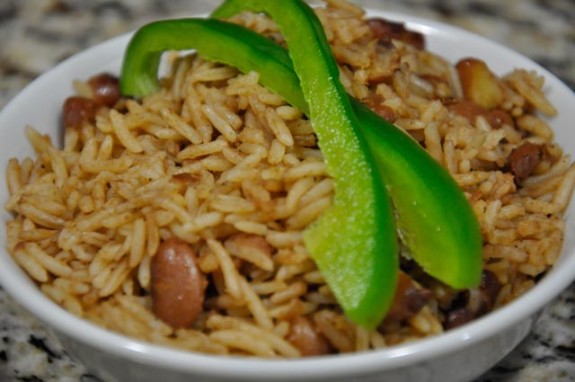
Rice and Beans are pretty much at the core of every Haitian Meal. Don't even invite a fellow Haitian to dinner if u aren't serving some sort of rice dish. It ain't natural to us. This should be the first of many Haitian recipes you master.

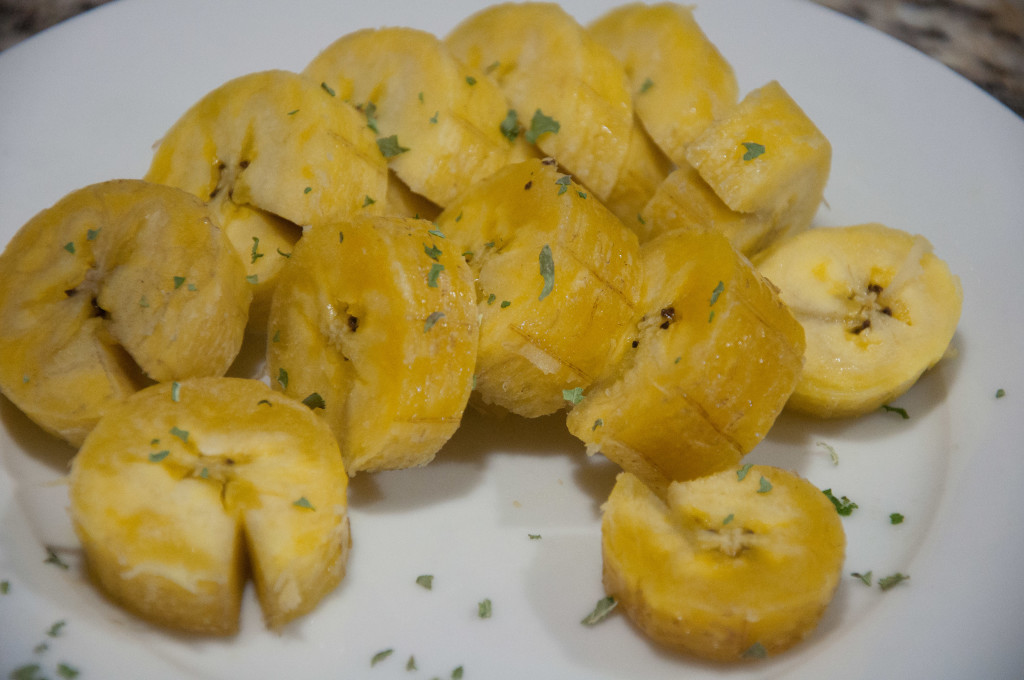
Plantains from HaitianCooking.com
Haitian Shrimp in creole sauce is a common dish served mainly near the costal cities of Haiti. Ingredients in the dish vary from village to village, but is always the same at its base. ]]>
Haitian Shrimp in creole sauce is a common dish served mainly near the costal cities of Haiti. Ingredients in the dish vary from village to village, but is always the same at its base. The meal goes great any rice, plantains or corn meal. Here's our version.
In a medium bowl, add the shrimp and Adobo seasoning.
Sauté the bell peppers, onions, and scotch bonnet pepper on medium heat for 5 min.
Stir in the shrimp, tomato paste, and water.
Reduce heat to medium and cover.
Allow shrimp to cook for 5 min and serve.